Xevqoriniks
Free Framework
Free Framework
Couldn't load pickup availability
Share
- 💾 Digital file available after purchase
- 📚 Long-term availability
- 🔐 Secure checkout
- 🗓️ Content updated in 2026
Self-paced learning overview
1. Problem Statement
Digital environments contain many interconnected components, so new cybersecurity concepts can feel disconnected without an underlying structure. Beginners often encounter terms related to threats, data, networks, and protection without understanding how these areas interact. This can make even simple learning scenarios harder to analyze and can make it difficult to identify which factors matter for security. Individual rules also do not always explain why a particular action may increase or reduce digital risk. Before moving into more detailed subjects, learners can benefit from developing a connected understanding of foundational cybersecurity principles.
2. Solution
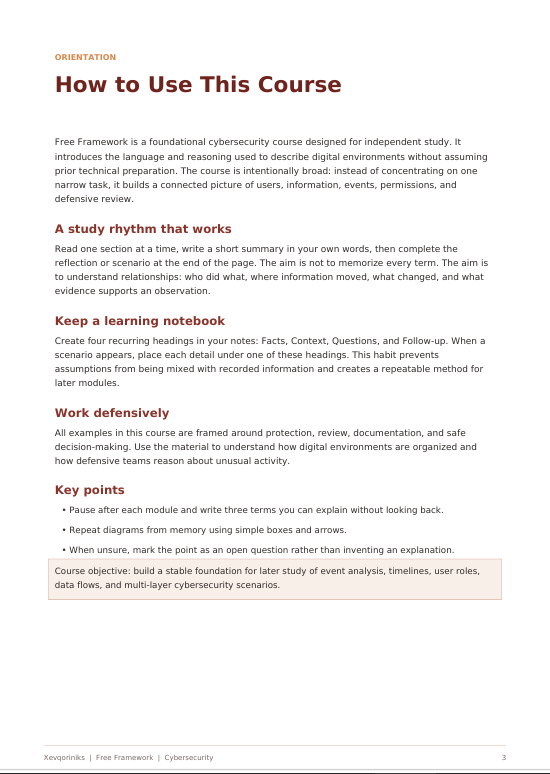
Free Framework organizes introductory cybersecurity subjects into a structured learning sequence. The materials begin with digital environment fundamentals and gradually move into risks, data, and basic protection models. Each module explains both individual concepts and the connections between them. Learning scenarios provide opportunities to examine common situations and identify factors that should be considered during analysis. This structure creates a foundation for continuing with later Xevqoriniks courses.
3. What's Inside
- Module 1: Digital Security Foundations — learn what cybersecurity covers, which parts of a digital environment require protection, and how users, data, and systems relate to one another.
- Module 2: Understanding Digital Risks — explore common categories of digital risk, sources of threats, and factors that may affect information security.
- Module 3: Data Protection Principles — study foundational approaches to responsible data storage, transfer, and use.
- Module 4: Accounts and Identity — examine the role of digital identity, credentials, and user verification within a protection structure.
- Module 5: Recognizing Suspicious Activity — learn how to review common signs of unusual digital activity and distinguish routine events from situations that may require further review.
- Module 6: Building a Security Mindset — organize the course material through learning scenarios, review questions, and introductory risk analysis.
4. Who Is This For?
✅ Suitable if you:
- are beginning your cybersecurity studies;
- want to understand foundational terminology;
- are interested in digital protection principles;
- want to examine digital risks through a more structured approach;
- plan to study broader cybersecurity subjects later;
- prefer learning materials arranged in a progressive sequence.
❌ Not for you if you:
- are looking only for highly advanced technical research materials;
- already work extensively with detailed cybersecurity analysis;
- expect materials involving unauthorized activity against digital environments belonging to others;
- are looking for a course focused entirely on one narrow subject.
5. What You'll Learn
While working through the course materials, you will learn to:
- explain foundational cybersecurity concepts;
- distinguish common categories of digital risk;
- describe the role of data within digital protection;
- understand the basic logic of digital identity;
- identify common signs of unusual activity;
- review simple learning scenarios from a security perspective;
- understand relationships between users, data, and digital environments;
- apply an introductory risk-review structure to learning examples.
6. Refund Policy
The course follows a 30-day refund period under the Xevqoriniks Refund Policy. We recommend reviewing the refund terms and the conditions that apply to digital educational materials before enrolling.
7. Certificates & Credentials
After completing Free Framework, we provide a Xevqoriniks certificate confirming completion of the learning materials included in this course.
Do I need previous cybersecurity experience?
Do I need previous cybersecurity experience?
No. Xevqoriniks courses follow a progressive structure, with introductory materials covering foundational concepts and later tiers moving into more detailed topics. Each course explains who it is intended for and which subjects are covered within its modules.
How are the learning materials structured?
How are the learning materials structured?
Each course is divided into themed modules containing explanations, examples, learning scenarios, and practical exercises. The materials cover digital security, data handling, event analysis, protection principles, and other subjects depending on the course tier.
Is a certificate provided after completing a course?
Is a certificate provided after completing a course?
Yes. After completing the learning materials for the selected course, Xevqoriniks provides a completion certificate showing the course title.