Understand Digital Protection — From Foundations to Structured Analysis

Xevqoriniks courses guide learners through digital risks, events, user roles, data handling, and cybersecurity analysis using structured modules, examples, and practical exercises.

Security Begins with Understanding

Our mission is to create cybersecurity learning materials that help learners understand relationships between digital events, data, users, and protective mechanisms. We organize the courses so that each subject builds naturally on earlier material and provides a foundation for continued cybersecurity study.

  • GitHub logo with a black circle and white silhouette of a cat.
  • LinkedIn logo on a white background
  • Black circle with a white 'M' in the center
  • Rusty Bartlett - Digital Forensics Analyst

    Rusty Bartlett

    Digital Forensics
    Analyst

  • Sandy Hoover - Network Security Analyst

    Sandy Hoover

    Network Security
    Analyst

  • Otto Jones - Incident Response Analyst

    Otto Jones

    Incident Response
    Analyst

  • Aline Oliver - Security Architecture Analyst

    Aline Oliver

    Security Architecture
    Analyst

A modern, sunlit open-plan office with light wood desks, black office chairs, computer monitors, large windows, and a high ceiling with exposed industrial ductwork.

How Xevqoriniks Began

A modern office workspace with several people collaborating around computer monitors at wooden desks, with warm lighting and glass partitions in the background.

Xevqoriniks started with the idea of bringing disconnected cybersecurity topics into one progressive learning system. The team began with digital protection foundations and gradually expanded the materials to cover digital events, user roles, timelines, data movement, and analytical scenarios.

Shop all
  • A 3D geometric hexagonal logo or emblem featuring concentric rings in black, dark brown, bronze, and copper, with a central wireframe cube structure on a plain white background.

    Connected Topics

    Subjects are linked
    together so learners can
    understand the wider
    logic of a digital
    environment rather
    than study isolated
    concepts.

  • A 3D isometric digital illustration of a network or hub-and-spoke system, featuring a central copper-colored octagonal server connected to eight surrounding dark gray square nodes with small copper cubes on top, all linked by thin copper lines on a white background.

    Scenario Analysis

    Educational situations
    bring events,
    timelines, roles,
    and data together
    within one
    connected
    digital scenario.

  • A stylized 3D icon of a person inside a hexagonal frame, rendered in warm brown, beige, and dark gray tones on a plain white background.

    Independent Pace

    Learners can work
    through the materials
    according to their own
    schedule, revisit earlier
    modules, and review
    individual subjects
    when needed.

  • A 3D isometric infographic or flowchart illustration featuring stacked horizontal bars in beige, burgundy, terracotta, dark gray, and charcoal, with small icons, arrows, and timeline markers on a plain white background.

    Offline Study

    Course files
    can be downloaded
    to a compatible
    device and used for
    study without a
    continuous internet
    connection.

30-days refund guarantee

Try the course risk-free. If you're not satisfied for any reason, get a full refund. No questions asked. Refund requests may be submitted within 30 days in accordance with
our Refund Policy.

  • Rosalyn Middleton

    Rosalyn Middleton

    She came to Xevqoriniks without a structured cybersecurity background and wanted to begin with foundational concepts before moving into more detailed subjects. She appreciated the format of focused learning sections, examples, and review exercises that could be studied at her own pace.

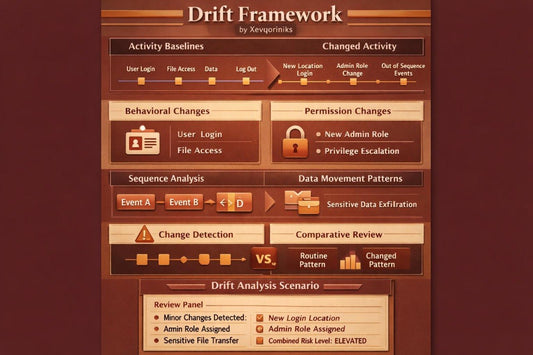
    “I found it useful to return to earlier modules and review the diagrams again whenever I wanted to revisit a particular subject.”

  • Dylan Mccall

    Dylan Mccall

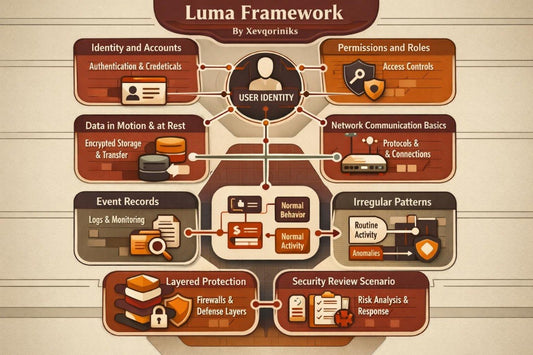
    He began with a basic understanding of digital security but found it difficult to connect accounts, events, permissions, and data handling within one coherent picture. He found the progressive module structure particularly useful because each new concept built naturally on earlier subjects.

    “I liked that the materials did not feel like a collection of isolated terms — I could see how different subjects connected to one another.”

See How the Learning Is Built

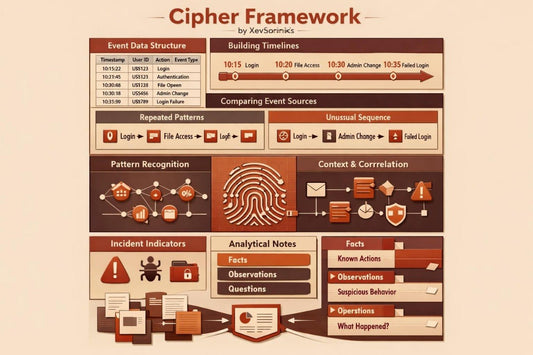
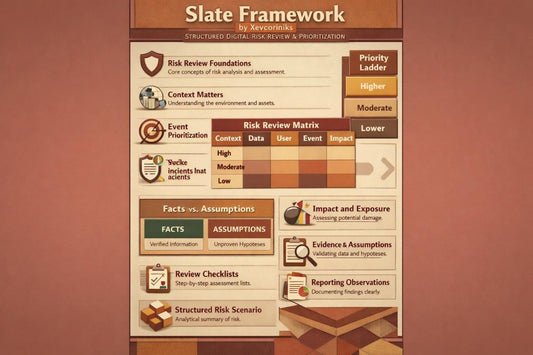
Explore the Xevqoriniks learning path and see which subjects, modules, and analytical scenarios are included in each course. Compare the different study directions and choose materials that match your current level of preparation.

  • Tablet displaying course cover
  • A silver laptop shown open against a plain white background, with a dark abstract screen displaying the text 'Xevqoriniks' and 'Free Framework'.
  • A smartphone centered on a light gray background, displaying the text 'Xevqoriniks' and 'Lattice Framework' over an abstract red, orange, and dark geometric wallpaper.

Start with a Free Learning Module

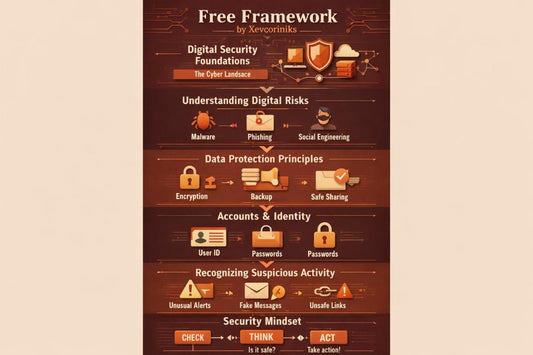
Begin exploring Xevqoriniks with a free introductory course covering foundational cybersecurity concepts. The materials introduce the learning format and core subjects that form the basis of later courses.